Showing posts with label Pema Chodron. Show all posts

Sunday, June 8, 2014

Chogyam Trungpa - Training the Mind and Cultivating Loving-Kindness


http://www.amazon.co.uk/gp/product/1590302524/ref=as_li_ss_tl?ie=UTF8&camp=1634&creative=19450&creativeASIN=1590302524&linkCode=as2&tag=freuquot-21
The slogans contained in this book are designed to awaken the heart and cultivate love and kindness toward others. They are revolutionary in that practicing them fosters abandonment of personal territory in relating to others and an understanding of the world as it is.

The fifty-nine provocative slogans presented here—each with a commentary by the Tibetan meditation master Chögyam Trungpa—have been used by Tibetan Buddhists for eight centuries to help meditation students remember and focus on important principles and practices of mind training. They emphasize meeting the ordinary situations of life with intelligence and compassion under all circumstances. Slogans include, "Don't be swayed by external circumstances," "Be grateful to everyone," and "Always maintain only a joyful mind."

This edition contains a foreword by Pema Chödrön.


Chogyam Trungpa - The Myth of Freedom and the Way of Meditation


http://www.amazon.co.uk/gp/product/1590302893/ref=as_li_ss_tl?ie=UTF8&camp=1634&creative=19450&creativeASIN=1590302893&linkCode=as2&tag=freuquot-21
Freedom is generally thought of as the ability to achieve goals and satisfy desires. But what are the sources of these goals and desires? If they arise from ignorance, habitual patterns, and negative emotions, is the freedom to pursue these goals true freedom—or is it just a myth?

Chögyam Trungpa's unique ability to express the essence of Buddhist teachings in the language and imagery of modern American culture makes his books among the most accessible works of Buddhist philosophy. Here Trungpa explores the true meaning of freedom, showing us how our preconceptions, attitudes, and even our spiritual practices can become chains that bind us to repetitive patterns of frustration and despair. This edition features a new foreword by Pema Chödrön, a close student of Trungpa and the best-selling author of When Things Fall Apart.


Pema Chodron - Why I Became a Buddhist


Pema Chodron reveals the time-tested Buddhist antidote to suffering—and shows how to apply it in your own life. The simple and elegant meditation practice known as tonglen, she teaches, is the perfect medicine for "ordinary people like ourselves." Through tonglen, we can use life's difficulties as a way to befriend ourselves, accept the past we have rejected, and widen our circle of compassion.

Saturday, June 7, 2014

Bill Moyers With Pema Chodron

During this in-depth interview filmed in 2006, Pema responds to Bill Moyers’ questions about spiritual warriorship, silent retreats, suffering, being “hooked” (shenpa), groundlessness and insecurity, Buddhism and the Buddha, prayer, faith, contentment, forgiveness and satisfaction.


Read the complete interview transcript:

BILL MOYERS: BILL MOYERS: Welcome. I'm Bill Moyers. We've seen in this series how faith has a place in keeping an open heart, and reason, a means of keeping an open mind. In this hour, Pema Chödrön takes us beyond faith and reason. Her answer to the frenzy of modern life is a calm mind and a warm heart, the journey and discipline of 30 years as a Buddhist nun. Buddhism is not so much a religion as it is a way of life. It marks no divide between the sacred and the secular. And when you get serious about it, Buddhism touches everyday experience. That's what Pema Chödrön teaches and writes. In helping many others to find their own footing on the path of enlightenment, she's also helping to change the face of Buddhism in America. Once upon a time, this was how most of us in the West thought of Buddhism -- monks, seeking mental and moral purification through ancient ritual. Images of great temples. Exotic art. And the mysterious, serene deity. But it was this man who came to personify Buddhism for us -- the Dalai Lama, the spiritual leader of Buddhism. He fled Tibet when Chinese communists overran his country, and has since become one of the world's most popular spiritual figures. I'm just one of scores of journalists to whom he has patiently explained Buddhist concepts.

DALAI LAMA: Religion is not outside. Religion is here. I think essential, essential in a religion is good heart. Something I call love and compassion is the universal religion. That's my religion.

BILL MOYERS: In recent years, Buddhism has found a welcome in America, thanks to books by some of its leading teachers, who point the way to a practice based on direct experience, rather than belief. Pema Chödrön is one of those teachers. Here she is, at the Omega Institute in Rhinebeck, New York, where people come to learn about Buddhism. PEMA CHÖDRÖN: The thing is, what we find if we're not used to sitting quietly with ourselves, not used to meditation, not used to having any inner solitude in our lives, we find that we're very threatened by nothing happening.

BILL MOYERS: When she's not on the road, teaching, Pema Chödrön lives, writes, and meditates at this monastic center in Cape Breton, Nova Scotia, where solitude replenishes her. For years, she trained as a pupil of the late renowned Buddhist master, Chögyam Trungpa Rinpoche, of the Shambhala Buddhist tradition. She wasn't always Pema Chödrön. Born Deirdre Blomfield-Brown, she grew up in New Jersey. Here she is as a teenager, at her wedding in the mid-'50s, and with her children. Her grandchildren trick-or-treat with a Buddhist Batwoman. And even Buddhist nuns have to pump their own gas these days. Her books sell widely, with titles such as, WHEN THINGS FALL APART, THE PLACES THAT SCARE YOU, and NO TIME TO LOSE. Her readers not only discover modern insights into ancient practices. They also come to see how this housewife and mother became what the Buddhists call a bodhisattva warrior.

BILL MOYERS: What is a bodhisattva warrior?

PEMA CHÖDRÖN: Well, it's someone who takes a vow, actually, which I have done, and many Buddhists do, that, my main passion in life is to awaken myself. And I believe that everybody could do that. And I will devote my life to the degree that I can awaken. To that degree I will devote my life to trying to inspire other people to believe that they could and, obviously behind all this is the de-escalation of violence, and aggression, and the escalation of loving, kindness and compassion, and those kinds of feelings. So the path is about how the individual works with their own mind, and how that affects the family, the society, the nation, the world.

BILL MOYERS: After 30 years--

PEMA CHÖDRÖN: But it isn't like daydreaming that then, there's not going to be anymore mean people in the world. There's not going to be anymore prejudice in the world. And it's not just experience based on reading the books, and listening to the teachers. There's also a practice, which is a meditation practice. And then you just say everyone needs some solitude in their life. And this solitude could be that you take time to sit with yourself in meditation 15 minutes a day, you know. Or longer. Or you find time out in the busyness of the whole thing. I've had many times when I meditate, and it seems like my mind is just going a 100 miles an hour. And yet, when I stand up and walk into life, there's more room in my mind. I guess that's how I would describe it.

BILL MOYERS: More room in your mind?

PEMA CHÖDRÖN: Yeah, someone once said to me, "The best in that spiritual instruction is when you wake up in the morning and you say, 'I wonder what's going to happen today?'" And then carry that kind of curiosity through your life.

BILL MOYERS: That's what intrigues me about you Buddhists. Is you go for long periods of time deep in to realms the rest of us are hardly aware of. What was the longest period you experienced silence?

PEMA CHÖDRÖN: I guess a year.

BILL MOYERS: A year. What happens during that period?

PEMA CHÖDRÖN: The first thing that happens is you climb the walls. This is personal with me. It doesn't happen anymore. But because the detox is so intense, I remember thinking like, someone coming to the door to just drop off a note or something. And I felt like I was in Kansas, and Oz was outside the door. You know, it's like sensory deprivation. But, gradually, what begins to happen is that you sink so deeply into what life has been distracting you from. Because it's a definition of no distractions. That's the purpose of the retreat, no distractions. You quickly learn that distractions are not just phone calls and emails and outer phenomena. Our own mind, and our longings, and our cravings, and our fantasies and everything are also major distractions. And, as time goes on, and you're feeding it less because no talking. You begin to sink deeper into the undistracted state. And then you begin to realize that life is always pulling you away from being fully present.

BILL MOYERS: Fully present. What is that?

PEMA CHÖDRÖN: It is basically a wide awake state where your sense perceptions are wide open, in the tradition I follow. And if you could imagine seeing and hearing, tasting and smelling and so forth, without any filter between you and your experience. It's as if suddenly all of your sense perceptions have been like narrow little slits. And now they're wide open. Like they have no outer dimension. But let me say this, if the result of that life was that I had to stay in that seclusion, I wouldn't think I had it measured up to a hill of beans. So, for me, I always go out and in, in and out of this kind of situation. Because I want to go deeper. But, the only reason I want to go deeper is to be there for other people in increasingly difficult situations. It's kind of based on deeply longing to be free of suffering and then it extends to wanting other people to be free of suffering. And the suffering that you see escalated in the world. And one of the principle teachings of the Buddha was that he said, "I teach only two things. Suffering and the end of suffering." So this conviction that sentient beings could be free of suffering, they could end their suffering. That doesn't mean physical pain. It doesn't mean outer circumstances being unpleasant. It means what you do with the things that happen.

BILL MOYERS: The Buddha talked about the truth of suffering.

PEMA CHÖDRÖN: Yeah.

BILL MOYERS: What do you think he meant by suffering? And what do you Buddhists mean by suffering?

PEMA CHÖDRÖN: Suffering?

BILL MOYERS: Yes.

PEMA CHÖDRÖN: Well, that's a complex question, but it doesn't mean that we could be free of that, if fire burns you, it won't hurt. If you get cut, it won't hurt. It also doesn't mean that if someone you love very dear, deeply, dies you won't feel sadness. And it doesn't mean that bad things won't happen to you anymore, you know? It doesn't mean that you won't have your personal tragedies and catastrophes and crisis. And it also certainly doesn't mean that you could avoid planes flying into the towers, you know? Do you know what I'm saying?

BILL MOYERS: I do know about that because--

PEMA CHÖDRÖN: So it's all about that the end of suffering has to do with how you relate with pain. Let's distinguish just for semantics, the difference between, let's call pain the unavoidable and let's call suffering what could what could lessen and dissolve in our lives. So, if there's sort of a basic phrase you could say that it isn't the things that happen to us in our lives that cause us to suffer, it's how we relate to the things that happen to us that causes us to suffer. One of the things that this eighth century Indian Buddhist master, Shantideva, one of the things he says about this whole thing is work with little grievances such as the middle seat instead of the aisle seat or your favorite restaurant being closed or not being able to get into the movie. Or whatever it is, you know? He says "There's nothing that does not grow easier through familiarity." Putting up with little cares, I'll train myself to work with great adversity. So in other words, the premise there is that if you work with two, feeling hot and feeling cold, you work with mosquito bites and aisle and middle seats. And at that level, notice that you're hooked and work with not escalating it--

BILL MOYERS: You're hooked?

PEMA CHÖDRÖN: Yeah. That I'm hooked. Hooked is an interesting quality to me.

BILL MOYERS: What do you mean by it?

PEMA CHÖDRÖN: I mean, not only has something, evoked a response in me but it's going to be difficult for me to let go. Anger is like that for sure. Prejudice is like that. Critical mindedness is like that. You don't want to let go. There's something delicious about finding fault with something. And that can be including finding fault with one's self, you know? So that's what I mean by hooked. You're sort of it because of the image of a fish and the hook and it has this juicy worm on it and you know the consequences aren't going to be good. But you cannot resist. And one of the main things we're addicted to is escalating aggression.

BILL MOYERS: So you escalate the anger.

PEMA CHÖDRÖN: So I escalate the anger, you know? My teacher Dzigar Kongtrul Rinpoche, he calls it pouring kerosene on the fire, you know? In an attempt to put it out, you pour kerosene on the fire.

BILL MOYERS: I like that. I like the idea of being hooked. It's a new metaphor for me in the-

PEMA CHÖDRÖN: The word in Tibetan is Shenpa. And I've been teaching a lot about it lately because when I heard this teaching from one of my main teachers, Dzigar Kongtrul Rinpoche, I thought this is fabulous. Because he says it isn't the words themselves that you're saying to yourself. It isn't the emotions. It's this charge behind them that's the Shenpa. It's this hooked quality this difficult to let go. In my case, I read a book by Ch–gyam Trungpa Rinpoche. And it really resonated, you know?

BILL MOYERS: What resonated?

PEMA CHÖDRÖN: I'd have to go back a little bit further. I was at point in my life where I think it was the low point of my life. It evolved around a marriage breaking up. But-

BILL MOYERS: Your husband came home one day and said he was having an affair--

PEMA CHÖDRÖN: That's right. That's--

BILL MOYERS: He wanted a divorce, right?

PEMA CHÖDRÖN: That's right.

BILL MOYERS: And what did you do?

PEMA CHÖDRÖN: The first thing that happened, I had sort of an epiphany. Or I say in the book, I think, like a genuine spiritual experience which happens to people at a time of shock. Like car accidents and things. Which was time stood still. There was a completely timeless moment where all I saw was a light and heard the sounds. And it was like an eternal moment, you know? And then the mind came back. And I picked up a stone and threw it at him. You know? The mind came back and started, you know, this is what I'd say about fanning the whole thing, you know? But in any case, it took me a good year not to be over it. I wasn't over, I'd say, for about five years. But a good year for the pieces to sort of start coming back together. And in that time, I looked everywhere. Different therapies. All the different spiritual disciplines. I lived in an ashram. I did, you know weekend intensives in scientology which I didn't last very long in that. And--

BILL MOYERS: You went down the cafeteria of opportunity.

PEMA CHÖDRÖN: Yeah, well, I was suffering. And, you know, I guess to say what I was saying before, it was like there was a pain that was, maybe, unavoidable. But then I was causing myself to suffer by struggling, struggling, struggling and what I was saying and so forth. But on the other hand, it was pretty absolute. I don't think there was any way to not suffer because the rug had been pulled out so completely. The pain was so great. And into that process, sort of, near the end of the year, I happened to see this article called Working with Negativity which was a chapter out of a book but was in a magazine. And I read it. And the first line is something like there is nothing wrong with negativity. Like, because what I was feeling was fear, rage and tremendous confusion about my rage and my hatred and a kind of a deep, profound unshakeable groundlessness. And nothing could fill it, you know? People would take me to the movies. They'd take me to nice dinners. They'd do all these things. And nothing could get the pieces back. And that was the first thing I had read that just spoke right to what was happening. Because I was thinking to myself all this time, from day one, when he told me from day one, I thought there's something very profound in what is happening here. There is something very profound. Because all I see now as I look out of my eyes at the world, I see that a lot of us are just running around in circles pretending that there's ground where there actually isn't any ground. And that somehow, if we could learn to not be afraid of groundlessness, not be afraid of insecurity and uncertainty, it would be calling on an inner strength that would allow us to be open and free and loving and compassionate in any situation. But as long as we keep trying to scramble to get ground under our feet and avoid this uneasy feeling of groundlessness and insecurity and uncertainty and ambiguity and paradox, any of that, then the wars will continue. The racial prejudice will continue. The hatred against people of a different -- you don't agree with their sexual preferences. You don't agree with their religion. You don't agree with their skin color. You don't agree with their whatever, you know? Their politics. It will always continue because you can't avoid being triggered. What triggers you can get less and less in your life. But, you know, if you're trying to avoid being triggered, I read something recently where someone said that's like becoming a celibate nun like me or monk and then trying to get rid of all the sexually attractive people in the world in order to keep your vows. You know, it just doesn't work. You have to work on your side of it, you know?

BILL MOYERS: Help me to understand this meaning of groundlessness. What is that?

PEMA CHÖDRÖN: Well, what is groundlessness? Well, you experience it all the time. You experience it all the time. And I don't know about you personally, but generally speaking when people react against it. We experience it as unpleasant when it's insecurity. You know, you feel insecure. That's a groundless feeling. Embarrassed. Like off center, you know? When my husband told me that we were breaking up, you know, he was having an affair and he wanted a divorce, that was a big groundless moment. When the planes flew into the towers everyone felt groundlessness. It was like our reality as we knew it wasn't holding together.

BILL MOYERS: I think that's why some of went to work, you know? My wife and I went right down to the office. While the second plane was hitting the tower. Because I felt the need and I think she probably did, too, to-

PEMA CHÖDRÖN: To ground yourself. Yeah. So I'm not saying that it's entirely a bad thing. Because, I mean, ways that we experience groundlessness as a positive thing would be like awe, wonder, you know. Great beauty that just stops our mind. And so, as I say, sometimes it's pleasant. But my curiosity has been more around when it's unpleasant.

BILL MOYERS: And what was the step from that trauma in your life to taking up the training of becoming a nun?

PEMA CHÖDRÖN: Well, it didn't take very long. It didn't take very long, curiously enough, because believe me, it's the last thing, I grew up Catholic. And, not that I had a negative experience with nuns, but I never dreamt of being a nun, you know. It's the last thing I ever dreamt. But here I became a nun. So the first step was reading that article. And then I found a teacher. I wasn't looking for a teacher, but I met one. And, somehow within two years I became a nun. I mean it's very, very strange. In my life, when I've had certain thoughts, I say this is a forward thought and I have to follow it. It just happens every so often. And, for some reason taking the vows represented a forward thought. And, when I look back, it was premature. My children were young teenagers. And it would have been better to have waited until they were older.

BILL MOYERS: Did you ever feel guilt over that?

PEMA CHÖDRÖN: Oh yes. Yes. Yes. Yes. But in terms of having done it, I think the timing could have been better. But there's no other decision for me in life. That was the decision, you know. I always feel people are very fortunate, like this would be; you must feel this too. That somehow you find your niche or something. Where you always are somewhat on fire with a positive inspiration for, not even for your cause or something. But you've found something in your life that gives it deep meaning. And that doesn't run out.

BILL MOYERS: I understand better now what you write somewhere when you say that all you think most spiritual experiences begin with suffering. They begin with groundlessness. They begin when the rug has been pulled out from under.

PEMA CHÖDRÖN: Oh, they do. They do. They do. And I would say, as a teacher of meditation and Buddhist teachings, and talking to many other much more accomplished teachers than myself, one of the things that people say is that students can be very attracted to the ideas. And very enthusiastic about it, like intellectually and conceptually. But it's very superficial. It's not changing them at the core of their being. Or shaking anything up. You know, in terms of how they perceive reality. The limited kind of narrow way in which we perceive reality. It's not shaking it up at all. But when real hardship enters their lives, something that they can't just shake off, like great loss, or pain, or anything of this nature, you can't just shake it off. You can't just smile and make it ok. The rug has been pulled. It is groundless. Then people start asking, and seeking, and have profound wish to try out this whole path.

BILL MOYERS: There's a line somewhere. Someone says, I'm only paraphrasing it, that when an old culture is dying-

PEMA CHÖDRÖN: Yes.

BILL MOYERS: --the new culture will be formed by men and women who are not afraid of insecurity.

PEMA CHÖDRÖN: Right, I just loved that when I read it, you know. It will be formed by people who are not afraid of insecurity, is that what it said?

BILL MOYERS: Afraid to be insecure. What do you take that to mean?

PEMA CHÖDRÖN: Well, just what I've been saying, you know. And this was the article of Trungpa Rinpoche, why it just sort of was like a light bulb going off. Everything else seemed to be saying look towards the good. Chant until you're in an ecstatic state. You know, like that the underlying assumption was there was something wrong, and you wanted to avoid this groundless state, or this unformed state, or this state in which you felt uneasy and queasy. And Trungpa Rinpoche is saying not at all. It's like the matrix of creative potential. The matrix of the spiritual life. It's like if we could rest there, which I suppose would be the description of enlightenment or the mystic, you know. Rest in that place, and is completely happy. That's why, you know, they always say, with someone who's very, very awake, just to use a term for enlightenment, you know, the walls could start crumbling in and they wouldn't like freak out or something. Because it would be the whole -- everything in life, anything could happen. And they're kind of ready for anything to happen. Do you see what I'm saying?

BILL MOYERS: Is that what you mean by the term the awakened heart?

PEMA CHÖDRÖN: Yeah, I suppose. Awakened heart, awakened mind.

BILL MOYERS: The enlightenment the Buddhists talk of?

PEMA CHÖDRÖN: Yeah. Yeah. That you could, and you see this is one of the things that drew me to Buddhism. Because the Buddha taught that everybody had the potential, without exception, every living being has the potential to awaken. You know, to wake up.

BILL MOYERS: That's intriguing to me. Because the knock on Buddhism is that, well, all of this concentration on yourself-

PEMA CHÖDRÖN: The what of Buddhism--

BILL MOYERS: The knock on it. The criticisms of it.

PEMA CHÖDRÖN: Oh, the criticism-

BILL MOYERS: The public-- the public rap on it--

PEMA CHÖDRÖN: Oh, yeah, yeah, yeah.

BILL MOYERS: Is that all this concentration on yourself feeds your personal narcissism.

PEMA CHÖDRÖN: Oh yeah, no. I mean, it can. It can. I mean let's just say, just because you call yourself a Buddhist, you're just as hookable as anybody else. And Buddhists can become as much fundamentalists as anybody else, you know.

BILL MOYERS: As much fundamentalist?

PEMA CHÖDRÖN: Sure.

BILL MOYERS: You mean that rigid mind-

PEMA CHÖDRÖN: Yes. Yes.

BILL MOYERS: --that-- that we associate with-

PEMA CHÖDRÖN: No, the whole teaching. And usually what attracts people is it teaches that otherwise, but let's just say it's so basic in us, let's just say you're a Buddhist, I'm a Buddhist. And I've been doing this for over 30 years. But when someone hurts my feelings, and puts the knife in, and I actually think that they're actually purposefully slandering me, or gossiping about me, or saying a mean word, or, I just don't come out looking so good, you know, is my first impulse to love them? No. My first thing is I get hooked. And if it wasn't for the way I'm sort of thrilled by the challenge of that, I would just bite the hook like anyone else. And most Buddhists that take, it doesn't matter. We still bite the hook, we still get towed under. And we can still, I say clobber people with our peace signs, you know. So, it really doesn't matter what religion we are. We can be a fundamentalist, or a non violent, non aggressive propagator of love in the world, and fellowship of humanity. And you see what I'm saying?

BILL MOYERS: I do. I like this notion that we all are capable of being fundamentalist.

PEMA CHÖDRÖN: Right.

BILL MOYERS: Because we like to be angry at other people's wrongness.

PEMA CHÖDRÖN: Yeah, yeah, yeah.

BILL MOYERS: We all get--

PEMA CHÖDRÖN: So this is the part where I get really intrigued is I feel so passionate about wanting to teach, and live, personally live by this, and the main thing is free from fixed mind. That was a term of Trungpa Rinpoche. Free from fixed mind. Free from closed mind. Free from bigoted mind, or fundamentalist mind. And it all starts with the Shenpa. It all starts with getting hooked, you see what I'm saying. So that's where the work has to get done and no one can be naive and say, "I'm Shenpa free," you know. That might be a description of enlightenment, you know. Or maybe a description of enlightenment is Shenpa's not big problem when it happens. It's just another blurp on the radar screen, you know. But it doesn't set off the chain reaction. So we're all--

BILL MOYERS: Chain reaction?

PEMA CHÖDRÖN: Uh-huh.

BILL MOYERS: What do you mean chain reaction?

PEMA CHÖDRÖN: Well, it's like a tightening in the stomach, or tightening of the jaw. You can see it in other people. When you're talking to them you can see that they've just been hooked. Their eyes kind of glaze over or whatever. And if it just stayed there it wouldn't be a problem. But then you just think about it, and think about it, and think about it. And it's like a chain reaction. So let's say that the Shenpa, or the charge, or the hook quality is very subtle. And then the charge gets stronger and stronger and stronger. Until you're blind, and you're able to actually harm another human being, or start a hate campaign. So it's a chain reaction. And you can actually, if you come to your senses anywhere in the chain reaction you can interrupt it. But it gets harder and harder 'cause you become more on automatic pilot. And it's like an undertow. It's very seductive.

BILL MOYERS: Was it Shantideva who said, "We, who like senseless children--"

PEMA CHÖDRÖN: Yeah. "Shrink from suffering, but love its causes."

BILL MOYERS: Yeah.

PEMA CHÖDRÖN: Yeah.

BILL MOYERS: "Shrink from suffering but love its causes." How do you interpret that?

PEMA CHÖDRÖN: Well, just recently I was with a group of people. And I quoted that, and I asked them without any teaching at all to tell me what they thought it meant. And there was this line up at the microphone. Because people, you know, they talked about everything from being alcoholic. You know, shrink from suffering, don't like the suffering. But to mask the suffering I drink again and I have more suffering. What Shantideva is really getting at is, generally speaking, nobody wants to suffer. But our means of going about getting happy are not in sync with our desire to not suffer. A basic Buddhist teaching is that sentient beings, none of them want to suffer. But their way of going about getting happy escalates the suffering. So yelling when you're angry would be an example. And I tell this story, like last year I knew that if I kept working on a project I was working on I could feel my physical health starting to deteriorate. But the adrenaline for wanting to keep writing, I was writing an article, and it was taking a long time. And the adrenaline to want to keep working was driving me beyond what was sensible in terms of long hours and so forth. And I could feel that it was making me sick. And somewhat fragile health. And so, I stopped, and I said to myself, I got up in the morning and I had said to myself before, "I'm not going to start on this project until 1:30 in the afternoon. I'm going to spend the morning meditating, walking, calming kind of things. But I got up in the morning and I found myself at the desk with the pen. First thing, you know. So I sat there, and I said, "Why are you doing this?" And then so I'm having a dialogue with myself. "I'm doing this because I equate it with satisfaction. I'll finish this paper. And that makes me feel good to think that it will be finished.' So then I said to myself, "And if you start writing now, will you feel better?" "No, I won't, because my health is starting to go." "So why are you doing it?" So I just sat there with this feeling like someone is going to have come up bodily and gag me and put a mask on me, and drag me out of the house for me not to just start. Despite the fact that I knew it wasn't good. And then I came down just 'cause I want to. You know, I already knew I was doing it for this imagined satisfaction that I knew I wouldn't get. You see, so we're kind of stuck in that place.

BILL MOYERS: Did my colleagues get to you to tell you how to get to me? How to do a public diagnosis of me? I mean did they come to you and say, "You can get him if you talk about work"? You know? No, I'm the same way.

PEMA CHÖDRÖN: Yeah. Of course. I'm fascinated by that seductive pull. That urge to keep doing, as the Buddha would say, where your desire for satisfaction and happiness are not in sync with the methods you go about using. And then you could say the consequences, you know, of war and prejudice and so forth, they all come from that moment of the urge to do the same thing you've already done.

BILL MOYERS: Among the rolling hills and lakes of the Hudson River Valley, just 80 miles north of the clatter of New York City, sits the Omega Institute, an oasis for spiritual seekers. Pema Chödrön made a rare appearance at Omega's campus recently to teach from her book, "No Time to Lose: A Timely Guide to the Way of the Bodhisattva." The teachings are based on a text written by the eighth-century Buddhist sage, Shantideva. And its contents, as Pema Chödrön explains, are remarkably relevant to modern life.

PEMA CHÖDRÖN: In Tibetan, the word is Dunzi. I love this word, Dunzi. It means distractions -- distractions that just sort of, you can waste your whole life in Dunzi, you know, just, like, the lifestyle of just sort of flipping through magazines. Or -- I don't know. The thing is, what we find if we're not used to sitting quietly with ourselves and not used to meditation and not used to having any inner solitude in our lives, we find that we're very threatened by nothing happening. And we are addicted to dunzi addicted to distractions. And that's why you get on an airplane, and it's as if, I think they're just, like, terrified, what would happen if the video went off and there was no food, and we all had to sit there for the whole, you know, 1 1/2-hour flight, You know, and not have any entertainment? And, you know, all the books, you forgot your book and everything. It would be kind of interesting to see if people would, like, freak out. Because you look up -- you walk up and down the aisles, you know what everyone would do, they'd close their eyes and go to sleep. They'd just try to not be there. I try to meditate on airplanes. It is not easy, actually, because there is so much, the -- the videos are going like this, change, change, change, and there's all this electrical sound going through, and everyone is working with their little gameboys. And their little things and there's, like, so much happening in that little space, you know? Everyone's sitting in their little seats, and there's just, like, chaos. But it's all in the name of entertainment, you know, distracting you from being in this dreadful experience of being in this airplane for, you know, for however long. This lousy world, this lousy people, this lousy government, this lousy everything. Lousy weather, lousy blah blah blah blah. Pissed off, you know, it's too hot in here, it's too cold, I don't like the smell and, the person is too tall in front, and -- too fat next to me, and they're wearing perfume and I'm allergic, and just -- unnnh! So he says, the analogy is that you're barefooted, it's like being barefooted and walking across blazing-hot sand or across cut glass. Or in a field with thorns. And your feet are bare, and you say, this is just, you know, it's really hurting, it's terrible, it's too sharp, it's too painful, it's too hot. Do I have a great idea! I am just going to cover the whole, everywhere I go, I'm going to cover it with leather. And then it won't hurt my feet anymore. That's like saying, "I'm going to get rid of her and get rid of him and get the temperature right, and I'm going to ban perfume in the world and, you know, there will be no, nothing that bothers me anywhere. There -- I am going to get rid of everything, including mosquitoes, that bothers me, anywhere in the world, and then I will be a very happy, content person." We're laughing, but it's what we all do. That is how we do approach things. We think, if we could just get rid of them or cover it with leather, then our pain would go away. Well, sure, because, you know, then it wouldn't be cutting our feet anymore -- I mean, it's just logical, isn't it? But it doesn't make any sense, really. So he said, "but if you simply wrap the leather around your feet" -- in other words, shoes -- then you could walk across the boiling sand and the cut glass and the thorns, and it wouldn't bother you. So the analogy is, if you work with your mind, instead of trying to change everything on the outside, that's how your temper will cool down. * * *

BILL MOYERS: Do you look to the Buddha with the same kind of reverence that many Christians look to Jesus? Or Muslims look to Muhammad?

PEMA CHÖDRÖN: Yes, I do. The Buddha was a role model of what I myself can do.

BILL MOYERS: How so?

PEMA CHÖDRÖN: He was an ordinary human being with hopes and fears, and Shenpa, you know ability to get hooked. And he freed himself from suffering, not from pain but from suffering. And found his ability to communicate it so that it was very stirring to people around him. And allowed other people to become free. And I believe I can also do that. And I believe everybody can also do that. So he's the role model of someone who didn't give up on himself. Didn't give up on the world. Didn't give up on other people. And freed himself from suffering. This unnecessary suffering that Shantideva refers. We shrink from suffering but love its causes. "We hurt ourselves," he says, you know. So why should others be the object of our hatred. He says what he says, not implying that we should hate ourselves, but implying that we could take responsibility for our side of what you see.

BILL MOYERS: Do you-

PEMA CHÖDRÖN: But, yes, I have great veneration for the Buddha. You know, what-

BILL MOYERS: Do you pray to him? Like Christians pray to Jesus?

PEMA CHÖDRÖN: No. No I don't pray to him. Or even think of him, necessarily, as a role model. He was a person like myself that woke up the way I could, and the way all sentient beings could. But Buddha for me is that awakened mind itself. That totally open unbiased unprejudiced mind and heart. And I resonate with that. And I come back again and again to that mind and heart as the motivating factor of my life. And I think of that as you know, if you use the word Christ consciousness, you might call this Buddha consciousness, or Buddha nature. And so it's what he uncovered. It wasn't like he was reaching for something he didn't have. It was more like he had it all along. As if it was a mirror covered with dust, and he removed the dust. And then the shining mirror was always there. So he uncovered that. That's what I resonate with, my capacity to do that, and everyone's capacity to do that. So the bodhisattva says may all sentient beings be happy and free of suffering. And it means all. It doesn't mean except, you know, your list of people who you think should get there's, you know.

BILL MOYERS: By happiness, what do you mean by happiness?

PEMA CHÖDRÖN: Contentment. At home with yourself in your world. Not separating yourself from others. Not hardening your heart, or your mind to others, or to the world. That profound wellbeing which is not based on facts, so to speak. You know, like changing circumstances. It's not based on changing circumstances.

BILL MOYERS: How do you experience God?

PEMA CHÖDRÖN: How do I experience God? You know, that in Buddhism we do not believe in God or disbelieve in God. We keep it as an open question. So I don't use the word god much. I'm not at all even slightly offended by the word god. And I know it means a lot of different things to different people. So if I had to have a definition it would be that open space of mind that allows for ultimate possibilities. And doesn't narrow down into a security based or fear based view where my way has to have precedence.

BILL MOYERS: Do you describe yourself as a person of faith?

PEMA CHÖDRÖN: Well, I thought about this topic, because I knew it was a subject of faith and reason. And faith was not a term that I had ever used for myself. So I gave it some thought, you know. I do have a lot of faith. But the main faith is that sentient beings have the capacity to awaken all beings. And that, given the right causes and conditions, many people who are sort of neutral, and could get caught by the sweep, or a strong seduction towards aggression could equally be swayed towards peace and love and kindness. Because people have that capacity in them. Now this isn't to say that I don't see injustice. But I think I'm more of the school of Martin Luther King, you know. Where you want beloved community, where you take the view that wanting everyone to be healed, not wanting to win your side and make the other side wrong. And, ok, underlying this would be that you want for everyone to deescalate their aggression, and not increase their aggression. And I equate that with happiness and peace in the world and so forth.

BILL MOYERS: On almost any day, well I would say on every day in New York you can experience random acts of kindness. But, after 9/11 kindness seemed to be everyone's daily behavior. I saw so much kindness. And then, of course, it didn't take too long for it to disappear.

PEMA CHÖDRÖN: Ok, so this is like a big view of what happens with individuals. And what we saw in New York, and you see with people who are in those states, that it's a softness, a kindness, it's as people said during those days in New York, it's the only thing that makes sense. And then what happens? The habit comes back. Because, basically, the kindness comes out of not being able to escape from groundlessness. And then, when everyone is in the same situation, you're all groundless together, the only thing that makes sense is kindness. It's so interesting, you see, this almost proves, you know, if you're going to have a proof of faith in basic goodness, that sort of proves it. Then the person who believed in basic badness would say, no, the more fundamental thing is what reasserts itself. And I would say, no, what the Buddha taught was what reasserts itself is the classic texts call it adventitious. It means removable. It's temporary. Neurosis is temporary. Sanity is permanent.

BILL MOYERS: I like that.

PEMA CHÖDRÖN: But, also, I've done dialoguing, interfaith dialoguing when I was, about ten years ago I did a lot of it. And I came out of it feeling if your view is that of basic badness, you see it wherever you go. If your view is basic goodness, you see it wherever you go. And I said, I might be wrong, maybe basic badness is a fundamental state. But basic goodness makes for a much happier world. And for feeling more at home in the world, and more friendship. So I came out feeling, you know, I'm open enough to, maybe when I die, you know, some big plaque comes up and says, "You were wrong all your life. Everything you believed in your whole life is wrong." I think I'm preparing for that moment, you know, for it not to be anything that I thought it was. And it would be ok. And do you see what I'm saying?

BILL MOYERS: Have you forgiven your husband?

PEMA CHÖDRÖN: Oh sure. Yeah. Well, not only forgiven him, I tell him, you know, it's a little insulting to him actually. I say, "You know, your leaving me was the best thing that ever happened to me." It's, you know, I'm not sure he's forgiven me, you know. But sure I've forgiven him because, basically, without that, it's like people who say, "I lived such a superficial life until I found out I had a disease that wasn't going to get better." Do you see what I'm saying? Not everyone uses that to get happier. But for a lot of people, when you can't get rid of it, it sort of brings you to the bottom, and that kind of positive bottom where you surrender, and then things begin to open up for you. Somebody had given me a poem, and it had a line it which was, "Softening what is rigid in your heart." Work on yourself. Work on your own aggression. And that's sewing the seeds of peace. It's not that do this and then the war will be over in Iraq. You know, it's not naive that way. But it's talking about sewing seeds of peace. And this is where the meditation comes in. People who meditate, they do become much more in tune with being able to notice that they've been hooked and then also notice what they're saying to themselves at that time to escalate the whole thing. In other words, it does give you more clarity about what's going on with you.

BILL MOYERS: After over 30 years on this path of enlightenment when you took that vow to be a nun, do you feel you're close to a state of perfection?

PEMA CHÖDRÖN: No. No. I'm happy. I'm very happy. I feel satisfied with my life. If I died tomorrow, I'd feel I hadn't wasted my life. But my appetite is insatiable, and I feel I have a long way to go, you know, in terms of perfection.

BILL MOYERS: Who was the Zen master who told his student, "All of you are perfect, and you could use a little improvement."

PEMA CHÖDRÖN: That's was Suzuki Roshi. Yeah. "All of you are perfect, and you could use a little improvement." Yeah. So, you know, one of the things with the bodhisattva warrior, they say that "No matter how far you get in terms of being unhooked yourself, or being happy yourself, or always look back at who you used to be. Never forget to look back at the neurosis that you carried for so many years. Otherwise you'll lose your contact with the suffering of other people." So for the bodhisattva warrior, our kinship with each other is the crucial thing, you know. So it isn't that really you want to avoid the pain of the world, because that educates you about what other people are up against. But the suffering. When I remember earlier I tried to distinguish between pain and suffering? And that suffering is what could lessen, and there could be a sensation of suffering. So you're not trying to tell people that then there'll be no bad more things happening to good people. But that the good people will relate to things in a way that doesn't escalate their suffering, and therefore the suffering of those around them.

BILL MOYERS: Pema Chödrön, thank you very much for being with me.

PEMA CHÖDRÖN: It was my complete pleasure. And thank you. I feel very honored. Very honored to have had this chance to be with you.

BILL MOYERS: And I. Thank you so much.


Source: http://www.pbs.org/moyers/faithandreason/print/faithandreason107_print.html

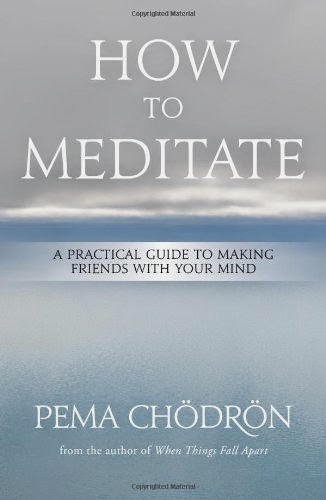
Pema Chodron Quotes - How to Meditate: A Practical Guide to Making Friends with Your Mind


http://www.amazon.co.uk/gp/product/1604079339/ref=as_li_ss_tl?ie=UTF8&camp=1634&creative=19450&creativeASIN=1604079339&linkCode=as2&tag=freuquot-21
“No … big … deal.” He wasn’t saying “bad,” and he wasn’t saying “good.” He was saying that these things happen and they can transform your life, but at the same time don’t make too big a deal of them, because that leads to arrogance and pride, or a sense of specialness. On the other hand, making too big a deal about your difficulties takes you in the other direction; it takes you into poverty, self-denigration, and a low opinion of yourself.”
― Pema Chödrön, How to Meditate: A Practical Guide to Making Friends with Your Mind

“In other words, you could endlessly try to have suffering cease by dealing with outer circumstances—and that’s usually what all of us do. It is the usual approach; you just try to solve the outer problem again and again and again. But the Buddha said something quite revolutionary, which most of us don’t really buy: if you work with your mind, you will alleviate all the suffering that seems to come from the outside. When something is bothering you—a person is bugging you, a situation is irritating you, or physical pain is troubling you—you must work with your mind, and that is done through meditation. Working with our minds is the only means through which we’ll actually begin to feel happy and contented with the world that we live in.”
― Pema Chödrön, How to Meditate: A Practical Guide to Making Friends with Your Mind

“The principle of nowness is very important to any effort to establish an enlightened society. You may wonder what the best approach is to helping society and how you can know that what you are doing is authentic and good. The only answer is nowness. The way to relax, or rest the mind in nowness, is through the practice of meditation. In meditation you take an unbiased approach. You let things be as they are, without judgment, and in that way you yourself learn to be. —CHÖGYAM TRUNGPA RINPOCHE”
― Pema Chödrön, How to Meditate: A Practical Guide to Making Friends with Your Mind

“The principle of nowness is very important to any effort to establish an enlightened society.”
― Pema Chödrön, How to Meditate: A Practical Guide to Making Friends with Your Mind


Friday, June 6, 2014

Pema Chodron Quotes - No Time to Lose: A Timely Guide to the Way of the Bodhisattva


“In order to work with difficult outer circumstances, we need to gather our inner strength. If even ten or twenty minutes of meditation a day helps us to do this, let's go for it!”
― Pema Chödrön, No Time to Lose: A Timely Guide to the Way of the Bodhisattva

“Making good use of our limited time - the limited time from birth to death, as well as our limited time each day - is the key to developing inner steadiness and calm.”
― Pema Chödrön, No Time to Lose: A Timely Guide to the Way of the Bodhisattva


Pema Chodron Quotes - Taking the Leap: Freeing Ourselves from Old Habits and Fears


http://www.amazon.co.uk/gp/product/1590308433/ref=as_li_ss_tl?ie=UTF8&camp=1634&creative=19450&creativeASIN=1590308433&linkCode=as2&tag=freuquot-21
“Words themselves are neutral. It's the charge we add to them that matters”
― Pema Chödrön, Taking the Leap: Freeing Ourselves from Old Habits and Fears

“A Native American grandfather was speaking to his grandson about violence and cruelty in the world and how it comes about. He said it was as if two wolves were fighting in his heart. One wolf was vengeful and angry, and the other wolf was understanding and kind. The young man asked his grandfather which wolf would win the fight in his heart. And the grandfather answered, “The one that wins will be the one I choose to feed.”
― Pema Chödrön, Taking the Leap: Freeing Ourselves from Old Habits and Fears

“When things fall apart and we can’t get the pieces back together, when we lose something dear to us, when they whole thing is just not working and we don’t know what to do, this is the time when the natural warmth of tenderness, the warmth of empathy and kindness, are just waiting to be uncovered, just waiting to be embraced. This is our chance to come out of our self-protecting bubble and to realize that we are never alone. This is our chance to finally understand that wherever we go, everyone we meet is essentially just like us. Our own suffering, if we turn toward it, can open us to a loving relationship with the world.”
― Pema Chödrön, Taking the Leap: Freeing Ourselves from Old Habits and Fears

“Whether we’re seeking inner peace or global peace or a combination of the two, the way to experience it is to build on the foundation of unconditional openness to all that arises. Peace isn’t an experience free of challenges, free of rough and smooth, it’s an experience that’s expansive enough to include all that arises without feeling threatened.”
― Pema Chödrön, Taking the Leap: Freeing Ourselves from Old Habits and Fears

“When we feel dread, when we feel discomfort of any kind, it can connect us at the heart with all the other people feeling dread and discomfort. We can pause and touch into dread. We can touch bitterness of rejection and the rawness of being slighted. Whether we are at home or in a public spot or caught in a traffic jam or walking into a movie, we can stop and look at the other people there and realize that in pain and in joy they are just like me. Just like me they don’t want to feel physical pain or insecurity or rejection. Just like me they want to feel respected and physically comfortable.”
― Pema Chödrön, Taking the Leap: Freeing Ourselves from Old Habits and Fears


http://www.amazon.co.uk/gp/product/1590308433/ref=as_li_ss_tl?ie=UTF8&camp=1634&creative=19450&creativeASIN=1590308433&linkCode=as2&tag=freuquot-21


Pema Chodron Quotes - Comfortable with Uncertainty: 108 Teachings on Cultivating Fearlessness and Compassion


http://www.amazon.co.uk/gp/product/1590300785/ref=as_li_ss_tl?ie=UTF8&camp=1634&creative=19450&creativeASIN=1590300785&linkCode=as2&tag=freuquot-21
“Nothing ever goes away until it has taught us what we need to know.”
― Pema Chödrön, Comfortable with Uncertainty: 108 Teachings on Cultivating Fearlessness and Compassion

“There was once a lady who was arrogant and proud. Determined to attain enlightenment, she asked all the authorities how to go about it. She was told, "Well, if you climb to the top of this very high mountain, you'll find a cave there. Sitting inside that cave is a wise old woman. She will tell you." Having endured great hardships, the lady finally found this cave. Sure enough, sitting there was a gentle spiritual-looking old woman in white clothing, who smiled beatifically. Overcome with awe and respect, the lady prostrated at the feet of this woman and said, "I want to attain enlightenment. Show me how." This wise woman looked at her and asked sweetly, "Are you sure you want to attain enlightenment?" And the woman said, "Of course I'm sure." Whereupon the smiling woman turned into a demon, stood up brandishing a great big stick, and started chasing her, saying, "Now! Now! Now!" For the rest of her life, that lady could never get away from the demon who was always saying, Now! Now--that's the key. Mindfulness trains us to be awake and alive, fully curious, about now.”
― Pema Chödrön, Comfortable with Uncertainty: 108 Teachings on Cultivating Fearlessness and Compassion

“Be grateful to everyone" is about making peace with the aspects of ourselves that we have rejected... If we were to make a list of people we don't like - people we find obnoxious, threatening, or worthy of contempt - we would discover much about those aspects of ourselves that we can't face... other people trigger the karma that we haven't worked out.”
― Pema Chödrön, Comfortable with Uncertainty: 108 Teachings on Cultivating Fearlessness and Compassion

“Nothing in its essence is one way or the other.”
― Pema Chödrön, Comfortable with Uncertainty: 108 Teachings on Cultivating Fearlessness and Compassion

“There are many changes in the weather of a day.”
― Pema Chödrön, Comfortable with Uncertainty: 108 Teachings on Cultivating Fearlessness and Compassion

“Pain is not a punishment, pleasure is not a reward.”
― Pema Chödrön, Comfortable with Uncertainty: 108 Teachings on Cultivating Fearlessness and Compassion

“Our habitual patterns are, of course, well established, seductive, and comforting. Just wishing for them to be ventilated isn’t enough. Mindfulness and awareness are key. Do we see the stories that we’re telling ourselves and question their validity? When we are distracted by a strong emotion, do we remember that it is part of our path? Can we feel the emotion and breathe it into our hearts for ourselves and everyone else? If we can remember to experiment like this even occasionally, we are training as a warrior. And when we can’t practice when distracted but know that we can’t, we are still training well. Never underestimate the power of compassionately recognizing what’s going on.”
― Pema Chödrön, Comfortable with Uncertainty: 108 Teachings on Cultivating Fearlessness and Compassion

“Patience is not learned in safety.”
― Pema Chödrön, Comfortable with Uncertainty: 108 Teachings on Cultivating Fearlessness and Compassion

“Without loving-kindness, staying in pain is just warfare.”
― Pema Chödrön, Comfortable with Uncertainty: 108 Teachings on Cultivating Fearlessness and Compassion

“Fear is a natural reaction of moving closer to the truth.”
― Pema Chödrön, Comfortable with Uncertainty: 108 Teachings on Cultivating Fearlessness and Compassion

“What you do for yourself, any gesture of kindness, any gesture of gentleness, any gesture of honesty and clear seeing toward yourself, will affect how you experience your world. In fact, it will transform how you experience the world. What you do for yourself, you’re doing for others, and what you do for others, you’re doing for yourself.”
― Pema Chödrön, Comfortable with Uncertainty: 108 Teachings on Cultivating Fearlessness and Compassion

“I take refuge in the Buddha,” that means I take refuge in the courage and the potential of fearlessness, of removing all the armor that covers this awakeness of mine. I am awake; I will spend my life taking this armor off. Nobody else can take it off because nobody else knows where all the little locks are, nobody else knows where it’s sewed up tight, where it’s going to take a lot of work to get that particular iron thread untied.”
― Pema Chödrön, Comfortable with Uncertainty: 108 Teachings on Cultivating Fearlessness and Compassion

“LEARNING HOW to be kind to ourselves is important. When we look into our own hearts and begin to discover what is confused and what is brilliant, what is bitter and what is sweet, it isn’t just ourselves that we’re discovering. We’re discovering the universe.”
― Pema Chödrön, Comfortable with Uncertainty: 108 Teachings on Cultivating Fearlessness and Compassion

“it’s good to express our gratitude to others. It’s helpful to express our appreciation of others. But if we do that with the motivation of wanting them to like us, we can remember this slogan. We can thank others, but we should give up all hope of getting thanked in return. Simply keep the door open without expectations.”
― Pema Chödrön, Comfortable with Uncertainty: 108 Teachings on Cultivating Fearlessness and Compassion


http://www.amazon.co.uk/gp/product/1590300785/ref=as_li_ss_tl?ie=UTF8&camp=1634&creative=19450&creativeASIN=1590300785&linkCode=as2&tag=freuquot-21


Pema Chodron Quotes - The Wisdom of No Escape: And the Path of Loving-Kindness


http://www.amazon.co.uk/gp/product/1590307933/ref=as_li_ss_tl?ie=UTF8&camp=1634&creative=19450&creativeASIN=1590307933&linkCode=as2&tag=freuquot-21
“There is a story of a woman running away from tigers. She runs and runs and the tigers are getting closer and closer. When she comes to the edge of a cliff, she sees some vines there, so she climbs down and holds on to the vines. Looking down, she sees that there are tigers below her as well. She then notices that a mouse is gnawing away at the vine to which she is clinging. She also sees a beautiful little bunch of strawberries close to her, growing out of a clump of grass. She looks up and she looks down. She looks at the mouse. Then she just takes a strawberry, puts it in her mouth, and enjoys it thoroughly. Tigers above, tigers below. This is actually the predicament that we are always in, in terms of our birth and death. Each moment is just what it is. It might be the only moment of our life; it might be the only strawberry we’ll ever eat. We could get depressed about it, or we could finally appreciate it and delight in the preciousness of every single moment of our life.”
― Pema Chödrön, The Wisdom of No Escape: And the Path of Loving-Kindness

“Meditation practice isn't about trying to throw ourselves away and become something better. It's about befriending who we are already.”
― Pema Chödrön, The Wisdom of No Escape: And the Path of Loving-Kindness


Pema Chodron Quotes - Start Where You Are: A Guide to Compassionate Living


http://www.amazon.co.uk/gp/product/000719062X/ref=as_li_ss_tl?ie=UTF8&camp=1634&creative=19450&creativeASIN=000719062X&linkCode=as2&tag=freuquot-21
“Life is glorious, but life is also wretched. It is both. Appreciating the gloriousness inspires us, encourages us, cheers us up, gives us a bigger perspective, energizes us. We feel connected. But if that's all that's happening, we get arrogant and start to look down on others, and there is a sense of making ourselves a big deal and being really serious about it, wanting it to be like that forever. The gloriousness becomes tinged by craving and addiction. On the other hand, wretchedness--life's painful aspect--softens us up considerably. Knowing pain is a very important ingredient of being there for another person. When you are feeling a lot of grief, you can look right into somebody's eyes because you feel you haven't got anything to lose--you're just there. The wretchedness humbles us and softens us, but if we were only wretched, we would all just go down the tubes. We'd be so depressed, discouraged, and hopeless that we wouldn't have enough energy to eat an apple. Gloriousness and wretchedness need each other. One inspires us, the other softens us. They go together.”
― Pema Chödrön, Start Where You Are: A Guide to Compassionate Living

“If someone comes along and shoots an arrow into your heart, it’s fruitless to stand there and yell at the person. It would be much better to turn your attention to the fact that there’s an arrow in your heart...”
― Pema Chödrön, Start Where You Are: A Guide to Compassionate Living

“WE ALREADY HAVE everything we need. There is no need for self-improvement. All these trips that we lay on ourselves—the heavy-duty fearing that we’re bad and hoping that we’re good, the identities that we so dearly cling to, the rage, the jealousy and the addictions of all kinds—never touch our basic wealth. They are like clouds that temporarily block the sun. But all the time our warmth and brilliance are right here. This is who we really are. We are one blink of an eye away from being fully awake.”
― Pema Chödrön, Start Where You Are: A Guide to Compassionate Living

“When you begin to touch your heart or let your heart be touched, you begin to discover that it's bottomless, that it doesn't have any resolution, that this heart is huge, vast, and limitless. You begin to discover how much warmth and gentleness is there, as well as how much space.”
― Pema Chödrön, Start Where You Are: A Guide to Compassionate Living

“True compassion does not come from wanting to help out those less fortunate than ourselves but from realizing our kinship with all beings.”
― Pema Chödrön, Start Where You Are: A Guide to Compassionate Living

“None of us is ever OK, but we all get through everything just fine.”
― Pema Chödrön, Start Where You Are: A Guide to Compassionate Living

“One evening Milarepa returned to his cave after gathering firewood, only to find it filled with demons. They were cooking his food, reading his books, sleeping in his bed. They had taken over the joint. He knew about nonduality of self and other, but he still didn’t quite know how to get these guys out of his cave. Even though he had the sense that they were just a projection of his own mind—all the unwanted parts of himself—he didn’t know how to get rid of them. So first he taught them the dharma. He sat on this seat that was higher than they were and said things to them about how we are all one. He talked about compassion and shunyata and how poison is medicine. Nothing happened. The demons were still there. Then he lost his patience and got angry and ran at them. They just laughed at him. Finally, he gave up and just sat down on the floor, saying, “I’m not going away and it looks like you’re not either, so let’s just live here together.” At that point, all of them left except one. Milarepa said, “Oh, this one is particularly vicious.” (We all know that one. Sometimes we have lots of them like that. Sometimes we feel that’s all we’ve got.) He didn’t know what to do, so he surrendered himself even further. He walked over and put himself right into the mouth of the demon and said, “Just eat me up if you want to.” Then that demon left too.”
― Pema Chödrön, Start Where You Are: A Guide to Compassionate Living

“In truth, there is enormous space in which to live our everyday lives.”
― Pema Chödrön, Start Where You Are: A Guide to Compassionate Living

“When one of the emperors of China asked Bodhidharma (the Zen master who brought Zen from India to China) what enlightenment was, his answer was, “Lots of space, nothing holy.” Meditation is nothing holy. Therefore there’s nothing that you think or feel that somehow gets put in the category of “sin.” There’s nothing that you can think or feel that gets put in the category of “bad.” There’s nothing that you can think or feel that gets put in the category of “wrong.” It’s all good juicy stuff—the manure of waking up, the manure of achieving enlightenment, the art of living in the present moment.”
― Pema Chödrön, Start Where You Are: A Guide to Compassionate Living

“Buddha is our inherent nature—our buddha nature—and what that means is that if you’re going to grow up fully, the way that it happens is that you begin to connect with the intelligence that you already have. It’s not like some intelligence that’s going to be transplanted into you. If you’re going to be fully mature, you will no longer be imprisoned in the childhood feeling that you always need to protect yourself or shield yourself because things are too harsh. If you’re going to be a grown-up—which I would define as being completely at home in your world no matter how difficult the situation—it’s because you will allow something that’s already in you to be nurtured. You allow it to grow, you allow it to come out, instead of all the time shielding it and protecting it and keeping it buried. Someone once told me, “When you feel afraid, that’s ‘fearful buddha.’” That could be applied to whatever you feel. Maybe anger is your thing. You just go out of control and you see red, and the next thing you know you’re yelling or throwing something or hitting someone. At that time, begin to accept the fact that that’s “enraged buddha.” If you feel jealous, that’s “jealous buddha.” If you have indigestion, that’s “buddha with heartburn.” If you’re happy, “happy buddha”; if bored, “bored buddha.” In other words, anything that you can experience or think is worthy of compassion; anything you could think or feel is worthy of appreciation.”
― Pema Chödrön, Start Where You Are: A Guide to Compassionate Living

“Affirmations are like screaming that you're okay in order to overcome this whisper that you're not... maybe you're not okay. Well, no big deal. None of us is okay and all of us are fine.”
― Pema Chödrön, Start Where You Are: A Guide to Compassionate Living

“It's as if you were in a spaceship going to the moon, and you looked back at this tiny planet Earth and realized that things were vaster than any mind could conceive and you just couldn't handle it, so you started worrying about what you were going to have for lunch. There you are in outer space with this sense of the world being so vast, and then you bring it all down into this very tiny world of worrying about what's for lunch... We do this all the time.”
― Pema Chödrön, Start Where You Are: A Guide to Compassionate Living


http://www.amazon.co.uk/gp/product/000719062X/ref=as_li_ss_tl?ie=UTF8&camp=1634&creative=19450&creativeASIN=000719062X&linkCode=as2&tag=freuquot-21


Pema Chodron Quotes - The Places That Scare You: A Guide to Fearlessness in Difficult Times


http://www.amazon.co.uk/gp/product/000718350X/ref=as_li_ss_tl?ie=UTF8&camp=1634&creative=19450&creativeASIN=000718350X&linkCode=as2&tag=freuquot-21“Compassion is not a relationship between the healer and the wounded. It's a relationship between equals. Only when we know our own darkness well can we be present with the darkness of others. Compassion becomes real when we recognize our shared humanity.”
― Pema Chödrön, The Places That Scare You: A Guide to Fearlessness in Difficult Times

“A further sign of health is that we don't become undone by fear and trembling, but we take it as a message that it's time to stop struggling and look directly at what's threatening us. ”
― Pema Chödrön, The Places that Scare You

“Rejoicing in ordinary things is not sentimental or trite. It actually takes guts. Each time we drop our complaints and allow everyday good fortune to inspire us, we enter the warrior's world.”
― Pema Chödrön, The Places That Scare You: A Guide to Fearlessness in Difficult Times

“We insist on being Someone, with a capital S. We get security from defining ourselves as worthless or worthy, super ior or inferior. We waste precious time exaggerating or romanticizing or belittling ourselves with a complacent surety that yes, that’s who we are. We mistake the openness of our being—the inherent wonder and surprise of each moment—for a solid, irrefutable self. Because of this misunderstanding, we suffer.”
― Pema Chödrön, The Places That Scare You: A Guide to Fearlessness in Difficult Times

“When we touch the center of sorrow, when we sit with discomfort without trying to fix it, when we stay present to the pain of disapproval or betrayal and let it soften us, these are times that we connect with bohdichitta.”
― Pema Chödrön, The Places That Scare You: A Guide to Fearlessness in Difficult Times

“It is possible to move through the drama of our lives without believing so earnestly in the character that we play. That we take ourselves so seriously, that we are so absurdly important in our own minds, is a problem for us. We feel justified in being annoyed with everything. We feel justified in denigrating ourselves or in feeling that we are more clever than other people. Self-importance hurts us, limiting us to the narrow world of our likes and dislikes. We end up bored to death with ourselves and our world. We end up never satisfied.”
― Pema Chödrön, The Places That Scare You: A Guide to Fearlessness in Difficult Times

“ In meditation we discover our inherent restlessness. Sometimes we get up and leave. Sometimes we sit there but our bodies wiggle and squirm and our minds go far away. This can be so uncomfortable that we feel’s it’s impossible to stay. Yet this feeling can teach us not just about ourselves but what it is to be human…we really don’t want to stay with the nakedness of our present experience. It goes against the grain to stay present. These are the times when only gentleness and a sense of humor can give us the strength to settle down…so whenever we wander off, we gently encourage ourselves to “stay” and settle down. Are we experiencing restlessness? Stay! Are fear and loathing out of control? Stay! Aching knees and throbbing back? Stay! What’s for lunch? Stay! I can’t stand this another minute! Stay!””
― Pema Chödrön, The Places That Scare You: A Guide to Fearlessness in Difficult Times

“The essence of bravery is being without self-deception.”
― Pema Chödrön, The Places That Scare You: A Guide to Fearlessness in Difficult Times

“It's hard to know whether to laugh or to cry at the human predicament. Here we are with so much wisdom and tenderness, and—without even knowing it—we cover it over to protect ourselves from insecurity. Although we have the potential to experience the freedom of a butterfly, we mysteriously prefer the small and fearful cocoon of ego.”
― Pema Chödrön, The Places That Scare You: A Guide to Fearlessness in Difficult Times

“I dedicate the merit of the occasion to all beings. This gesture of universal friendship has been likened to a drop of fresh spring water. If we put it on a rock in the sunshine, it will soon evaporate. If we put it in the ocean, however, it will never be lost. Thus the wish is made that we not keep the teachings to ourselves but to use them to benefit others.”
― Pema Chödrön, The Places That Scare You: A Guide to Fearlessness in Difficult Times

“Things are as bad and as good as they seem. There's no need to add anything extra.”
― Pema Chödrön, The Places That Scare You: A Guide to Fearlessness in Difficult Times

“Patience is the training in abiding with the restlessness of our energy and letting things evolve at their own speed.”
― Pema Chödrön, The Places That Scare You: A Guide to Fearlessness in Difficult Times

“The Buddha’s principal message that day was that holding on to anything blocks wisdom. Any conclusion that we draw must be let go. The only way to fully understand the bodhichitta teachings, the only way to practice them fully, is to abide in the unconditional openness of the prajna, patiently cutting through all our tendencies to hang on.”
― Pema Chödrön, The Places That Scare You: A Guide to Fearlessness in Difficult Times

“Throughout my life, until this very moment, whatever virtue I have accomplished, including any benefit that may come from this book, I dedicate to the welfare of all beings.
May the roots of suffering diminish. May warfare, violence, neglect, indifference, and addiction also decrease.
May the wisdom and compassion of all beings increase, now and in the future.
May we clearly see all the barriers we erect between ourselves and others to be as insubstantial as our dreams.
May we appreciate the great perfection of all phenomena.
May we continue to open our hearts and minds, in order to work ceaselessly for the benefit of all beings.
May we go to the places that scare us.
May we lead the life of a warrior.”
― Pema Chödrön, The Places That Scare You: A Guide to Fearlessness in Difficult Times

“Rather than going after these walls and barriers with a sledgehammer, we pay attention to them. With gentleness and honesty, we move closer to those walls. We touch them, and smell them and get to know them well. We become familiar with the strategies and beliefs we use to build these walls: what are the stories we tell ourselves? What repels me and what attracts me? Without calling what we see right or wrong, we simply look as objectively as we can. We can observe ourselves with humor, not getting overly serious, moralistic or uptight about the investigation. Year after year, we train in remaining open and receptive to whatever arises. Slowly, very slowly, the cracks in the walls seem to widen and, as if by magic, bodhichitta is able to flow freely.”
― Pema Chödrön, The Places That Scare You: A Guide to Fearlessness in Difficult Times

“As the twelfth-century Tibetian yogi Milarepa said when he heard of his student Gampopa's peak experiences, 'They are neither good nor bad. Keep meditating.' ”
― Pema Chödrön, The Places That Scare You: A Guide to Fearlessness in Difficult Times

“Laziness is not particularly terrible or wonderful. Rather it has a basic living quality that deserves to be experienced just as it is. Perhaps we’ll find an irritating, pulsating quality in laziness. We might feel it as dull and heavy or as vulnerable and raw. Whatever we discover, as we explore it further, we find nothing to hold on to, nothing solid, only groundless, wakeful energy.

This process of experiencing laziness directly and nonverbally is transformative. It unlocks a tremendous energy that is usually blocked by our habit of running away. This is because when we stop resisting laziness, our identity as the one who is lazy begins to fall apart completely. Without the blinders of ego, we connect with a fresh outlook, a greater vision. This is how laziness—or any other demon—introduces us to the compassionate life.”
― Pema Chödrön, The Places That Scare You: A Guide to Fearlessness in Difficult Times

“Acknowledging that we are all churned up is the first and most difficult step in any practice. Without compassionate recognition that we are stuck, it’s impossible to liberate ourselves from confusion. ‘Doing something different’ is anything that interrupts our ancient habit of indulging in our emotions. We do anything to cut the strong tendency to spin out… Anything that’s non-habitual will do—even sing and dance or run around the block. We do anything that doesn’t reinforce our crippling habits. The third most difficult practice is to then remember that this is not something we do just once or twice. Interrupting our destructive habits and awakening our heart is the work of a lifetime.”
― Pema Chödrön, The Places That Scare You: A Guide to Fearlessness in Difficult Times

“Even though peak experiences might show us the truth and inform us about why we are training, they are essentially no big deal. If we can't integrate them into the ups and downs of our lives, if we cling to them, they will hinder us. We can trust our experiences as valid, but then we have to move on and learn how to get along with our neighbors. Then even the most remarkable insights can begin to permeate our lives. As the twelfth-century Tibetian yogi Milarepa said when he heard of his student Gampopa's peak experiences, 'They are neither good not bad. Keep meditation.' ”
― Pema Chödrön, The Places That Scare You: A Guide to Fearlessness in Difficult Times

“As the twelfth-century Tibetian yogi Milarepa said when he heard of his student Gampopa's peak experiences, 'They are neither good not bad. Keep meditation.' ”
― Pema Chödrön, The Places That Scare You: A Guide to Fearlessness in Difficult Times

“As the twelfth-century Tibetian yogi Milarepa said when he heard of his student Gampopa's peak experiences, 'They are neither good not bad. Keep meditating.' ”
― Pema Chödrön, The Places That Scare You: A Guide to Fearlessness in Difficult Times


http://www.amazon.co.uk/gp/product/000718350X/ref=as_li_ss_tl?ie=UTF8&camp=1634&creative=19450&creativeASIN=000718350X&linkCode=as2&tag=freuquot-21


Pema Chodron Quotes - When Things Fall Apart: Heart Advice for Difficult Times


http://www.amazon.co.uk/gp/product/0007183518/ref=as_li_ss_tl?ie=UTF8&camp=1634&creative=19450&creativeASIN=0007183518&linkCode=as2&tag=freuquot-21
“The most fundamental aggression to ourselves, the most fundamental harm we can do to ourselves, is to remain ignorant by not having the courage and the respect to look at ourselves honestly and gently.”
― Pema Chödrön, When Things Fall Apart: Heart Advice for Difficult Times

“The most difficult times for many of us are the ones we give ourselves.”
― Pema Chödrön, When Things Fall Apart: Heart Advice For Difficult Times

“Rather than letting our negativity get the better of us, we could acknowledge that right now we feel like a piece of shit and not be squeamish about taking a good look.”
― Pema Chödrön, When Things Fall Apart: Heart Advice for Difficult Times

“We think that the point is to pass the test or overcome the problem, but the truth is that things don't really get solved. They come together and they fall apart. Then they come together again and fall apart again. It's just like that. The healing comes from letting there be room for all of this to happen: room for grief, for relief, for misery, for joy. (10)”
― Pema Chödrön, When Things Fall Apart: Heartfelt Advice for Hard Times

“Most of us do not take these situations as teachings. We automatically hate them. We run like crazy. We use all kinds of ways to escape -- all addictions stem from this moment when we meet our edge and we just can't stand it. We feel we have to soften it, pad it with something, and we become addicted to whatever it is that seems to ease the pain.”
― Pema Chödrön, When Things Fall Apart: Heartfelt Advice for Hard Times

“To be fully alive, fully human, and completely awake is to be continually thrown out of the nest. To live fully is to be always in no-man's-land, to experience each moment as completely new and fresh. To live is to be willing to die over and over again. ”
― Pema Chödrön, When Things Fall Apart: Heart Advice for Difficult Times

“We don't set out to save the world; we set out to wonder how other people are doing and to reflect on how our actions affect other people's hearts.”
― Pema Chödrön, When Things Fall Apart: Heart Advice For Difficult Times

“I used to have a sign pinned up on my wall that read: Only to the extent that we expose ourselves over and over to annihilation can that which is indestructible be found in us...It was all about letting go of everything. p.7”
― Pema Chödrön, When Things Fall Apart: Heart Advice for Difficult Times

“Once there was a young warrior. Her teacher told her that she had to do battle with fear. She didn’t want to do that. It seemed too aggressive; it was scary; it seemed unfriendly. But the teacher said she had to do it and gave her the instructions for the battle. The day arrived. The student warrior stood on one side, and fear stood on the other. The warrior was feeling very small, and fear was looking big and wrathful. They both had their weapons. The young warrior roused herself and went toward fear, prostrated three times, and asked, "May I have permission to go into battle with you?" Fear said, "Thank you for showing me so much respect that you ask permission." Then the young warrior said, "How can I defeat you?" Fear replied, "My weapons are that I talk fast, and I get very close to your face. Then you get completely unnerved, and you do whatever I say. If you don’t do what I tell you, I have no power. You can listen to me, and you can have respect for me. You can even be convinced by me. But if you don’t do what I say, I have no power." In that way, the student warrior learned how to defeat fear. ”
― Pema Chödrön, When Things Fall Apart: Heart Advice for Difficult Times

“When things are shaky and nothing is working, we might realize that we are on the verge of something. We might realize that this is a very vulnerable and tender place, and that tenderness can go either way. We can shut down and feel resentful or we can touch in on that throbbing quality. (9)”
― Pema Chödrön, When Things Fall Apart: Heartfelt Advice for Hard Times

“As human beings, not only do we seek resolution, but we also feel that we deserve resolution. However, not only do we not deserve resolution, we suffer from resolution. We don't deserve resolution; we deserve something better than that. We deserve our birthright, which is the middle way, an open state of mind that can relax with paradox and ambiguity.”
― Pema Chödrön, When Things Fall Apart: Heart Advice for Difficult Times

“nothing ever goes away until it has taught us what we need to know
…nothing ever really attacks us except our own confusion. perhaps there is no solid obstacle except our own need to protect ourselves from being touched. maybe the only enemy is that we don’t like the way reality is now and therefore wish it would go away fast. but what we find as practitioners is that nothing ever goes away until it has taught us what we need to know. if we run a hundred miles an hour to the other end of the continent in order to get away from the obstacle, we find the very same problem waiting for us when we arrive. it just keeps returning with new names, forms, manifestations until we learn whatever it has to teach us about where we are separating ourselves from reality, how we are pulling back instead of opening up, closing down instead of allowing ourselves to experience fully whatever we encounter, without hesitating or retreating into ourselves.”

― Pema Chödrön, When Things Fall Apart: Heart Advice for Difficult Times


“We can spend our whole lives escaping from the monsters of our minds. (36)”
― Pema Chödrön, When Things Fall Apart: Heartfelt Advice for Hard Times

“Hope and fear come from feeling that we lack something; they come from a sense of poverty. We can’t simply relax with ourselves. We hold on to hope, and hope robs us of the present moment. We feel that someone else knows what is going on, but that there is something missing in us, and therefore something is lacking in our world.”
― Pema Chödrön, When Things Fall Apart: Heart Advice for Difficult Times

“So even if the hot loneliness is there, and for 1.6 seconds we sit with that restlessness when yesterday we couldn't sit for even one, that's the journey of the warrior. (68)”
― Pema Chödrön, When Things Fall Apart: Heartfelt Advice for Hard Times

“No one ever tells us to stop running away from fear...the advice we usually get is to sweeten it up, smooth it over, take a pill, or distract ourselves, but by all means make it go away. (5)”
― Pema Chödrön, When Things Fall Apart: Heartfelt Advice for Hard Times

“Letting there be room for not knowing is the most important thing of all. When there's a big disappointment, we don't know if that's the end of the story. It may just be the beginning of a great adventure. Life is like that. We don't know anything. We call something bad; we call it good. But really we just don't know.”
― Pema Chödrön, When Things Fall Apart: Heart Advice for Difficult Times

“When we protect ourselves so we won't feel pain, that protection becomes like armor, like armor that imprisons the softness of of the heart.”
― Pema Chödrön, When Things Fall Apart: Heart Advice for Difficult Times

“We are like children building a sand castle. We embellish it with beautiful shells, bits of driftwood, and pieces of colored glass. The castle is ours, off limits to others. We’re willing to attack if others threaten to hurt it. Yet despite all our attachment, we know that the tide will inevitably come in and sweep the sand castle away. The trick is to enjoy it fully but without clinging, and when the time comes, let it dissolve back into the sea.”
― Pema Chödrön, When Things Fall Apart: Heart Advice for Difficult Times

“What happens with you when you begin to feel uneasy, unsettled, queasy? Notice the panic, notice when you instantly grab for something. (51)”
― Pema Chödrön, When Things Fall Apart: Heartfelt Advice for Hard Times

“Things falling apart is a kind of testing and also a kind of healing. We think that the point is to pass the test or to overcome the problem, but the truth is that things don’t really get solved. They come together and they fall apart. Then they come together again and fall apart again. It’s just like that. The healing comes from letting there be room for all of this to happen: room for grief, for relief, for misery, for joy.”
― Pema Chödrön, When Things Fall Apart: Heart Advice for Difficult Times

“I used to have a sign pinned up on my wall that read: 'Only to the extent that we expose ourselves over and over to annihilation can that which is indestructible be found in us.”
― Pema Chödrön, When Things Fall Apart: Heart Advice for Difficult Times

“Without giving up hope—that there’s somewhere better to be, that there’s someone better to be—we will never relax with where we are or who we are.”
― Pema Chödrön, When Things Fall Apart: Heart Advice for Difficult Times

“Trying to run away is never the answer to being a fully human. Running away from the immediacy of our experience is like preferring death to life.”
― Pema Chödrön, When Things Fall Apart: Heart Advice for Difficult Times

“The most fundamental aggression to ourselves, the most fundamental harm we can do to ourselves, is to remain ignorant by not having the courage and the respect to look at ourselves honestly and gently.”
― Pema Chodron, When Things Fall Apart: Heart Advice for Difficult Times

“The first noble truth of the Buddha is that when we feel suffering, it doesn’t mean that something is wrong. What a relief. Finally somebody told the truth. Suffering is part of life, and we don’t have to feel it’s happening because we personally made the wrong move. In reality, however, when we feel suffering, we think that something is wrong. As long as we’re addicted to hope, we feel that we can tone our experience down or liven it up or change it somehow, and we continue to suffer a lot.”
― Pema Chödrön, When Things Fall Apart: Heart Advice for Difficult Times

“The very first noble truth of the Buddha points out that suffering is inevitable for human beings as long as we believe that things last—that they don’t disintegrate, that they can be counted on to satisfy our hunger for security.”
― Pema Chödrön, When Things Fall Apart: Heart Advice for Difficult Times

“The real thing that we renounce is the tenacious hope that we could be saved from being who we are.”
― Pema Chodron, When Things Fall Apart: Heart Advice for Difficult Times

“Everything is fresh, the essence of realization.”
― Pema Chödrön, When Things Fall Apart: Heart Advice for Difficult Times

“We think that if we just meditated enough or jogged enough or ate perfect food, everything would be perfect. But from the point of view of someone who is awake, that’s death. Seeking security or perfection, rejoicing in feeling confirmed and whole, self contained and comfortable, is some kind of death. It doesn’t have any fresh air. There’s no room for something to come in and interrupt all that. We are killing the moment by controlling our experience.”
― Pema Chödrön, When Things Fall Apart: Heart Advice for Difficult Times

“Awakeness is found in our pleasure and our pain, our confusion and our wisdom, available in each moment of our weird, unfathomable, ordinary everyday lives.”
― Pema Chödrön, When Things Fall Apart: Heart Advice For Difficult Times

“Honesty without kindness, humor, and goodheartedness can be just mean.”
― Pema Chödrön, When Things Fall Apart: Heart Advice For Difficult Times

“Letting there be room for not knowing is the most important thing of all. We”
― Pema Chödrön, When Things Fall Apart: Heart Advice for Difficult Times

“NOT CAUSING HARM obviously includes not killing or robbing or lying to people. It also includes not being aggressive—not being aggressive with our actions, our speech, or our minds. Learning not to cause harm to ourselves or others is a basic Buddhist teaching on the healing power of nonaggression. Not harming ourselves or others in the beginning, not harming ourselves or others in the middle, and not harming ourselves or others in the end is the basis of enlightened society.”
― Pema Chödrön, When Things Fall Apart: Heart Advice for Difficult Times

“The essence of life is that it’s challenging. Sometimes it is sweet, and sometimes it is bitter. Sometimes your body tenses, and sometimes it relaxes or opens. Sometimes you have a headache, and sometimes you feel 100 percent healthy. From an awakened perspective, trying to tie up all the loose ends and finally get it together is death, because it involves rejecting a lot of your basic experience. There is something aggressive about that approach to life, trying to flatten out all the rough spots and imperfections into a nice smooth ride.”
― Pema Chödrön, When Things Fall Apart: Heart Advice For Difficult Times

“The ground of not causing harm is mindfulness, a sense of clear seeing with respect and compassion for what it is we see. This is what basic practice shows us. But mindfulness doesn’t stop with formal meditation. It helps us relate with all the details of our lives. It helps us see and hear and smell, without closing our eyes or our ears or our noses. It’s a lifetime’s journey to relate honestly to the immediacy of our experience and to respect ourselves enough not to judge it. As we become more wholehearted in this journey of gentle honesty, it comes as quite a shock to realize how much we’ve blinded ourselves to some of the ways in which we cause harm. Our style is so ingrained that we can’t hear when people try to tell us, either kindly or rudely, that maybe we’re causing some harm by the way we are or the way we relate with others. We’ve become so used to the way we do things that somehow we think that others are used to it too. It’s painful to face how we harm others, and it takes a while.”
― Pema Chödrön, When Things Fall Apart: Heart Advice for Difficult Times

“Maybe the most important teaching is to lighten up and relax. It’s such a huge help in working with our crazy mixed-up minds to remember that what we’re doing is unlocking a softness that is in us and letting it spread. We’re letting it blur the sharp corners of self-criticism and complaint.”
― Pema Chödrön, When Things Fall Apart: Heart Advice For Difficult Times

“Thinking that we can find some lasting pleasure and avoid pain is what in Buddhism is called samsara, a hopeless cycle that goes round and round endlessly and causes us to suffer greatly. The very first noble truth of the Buddha points out that suffering is inevitable for human beings as long as we believe that things last—that they don’t disintegrate, that they can be counted on to satisfy our hunger for security.”
― Pema Chödrön, When Things Fall Apart: Heart Advice for Difficult Times

“We awaken this bodhichitta, this tenderness for life, when we can no longer shield ourselves from the vulnerability of our condition, from the basic fragility of existence. In the words of the sixteenth Gyalwa Karmapa, “You take it all in. You let the pain of the world touch your heart and you turn it into compassion.” It is said that in difficult times, it is only bodhichitta that heals.”
― Pema Chödrön, When Things Fall Apart: Heart Advice For Difficult Times